

As gardeners start dreaming about spring again, it’s worth appreciating the trees that carried the landscape through winter.
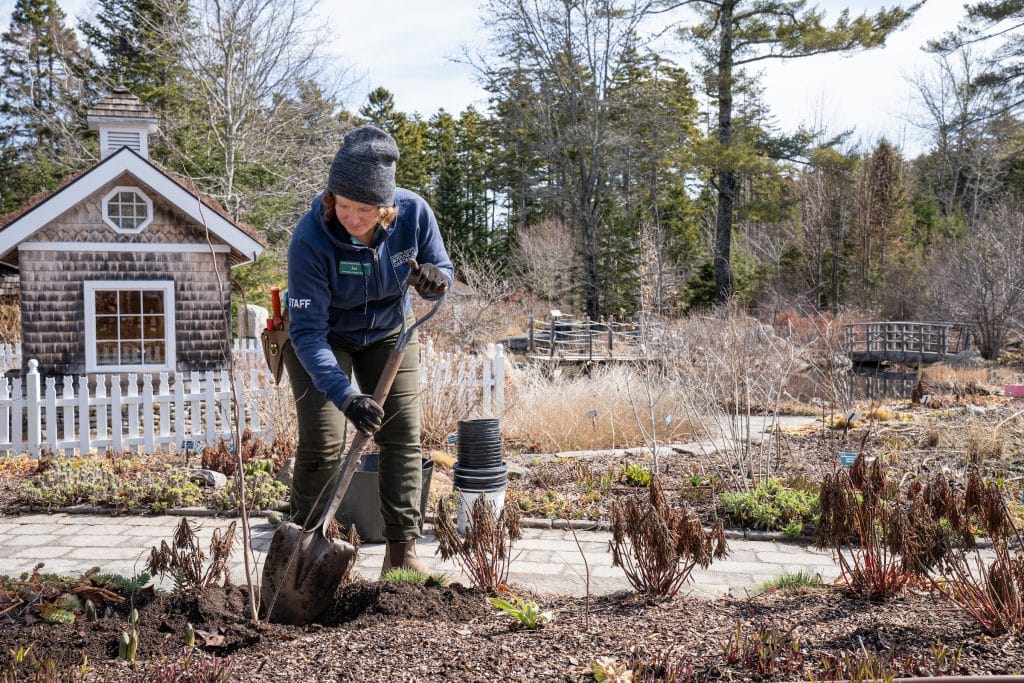
Our Horticulture Manager, Jen Dunlap, shares her favorite trees for different garden conditions — sunny, shady, dry, moist, and even small spaces — many of which shine brightest in the quiet months of winter:
Are you a gardener who likes staring out of your window at the barren snow-covered landscape before you, cup of tea in hand, wistfully dreaming of spring plans and plants? If so, you are not alone!
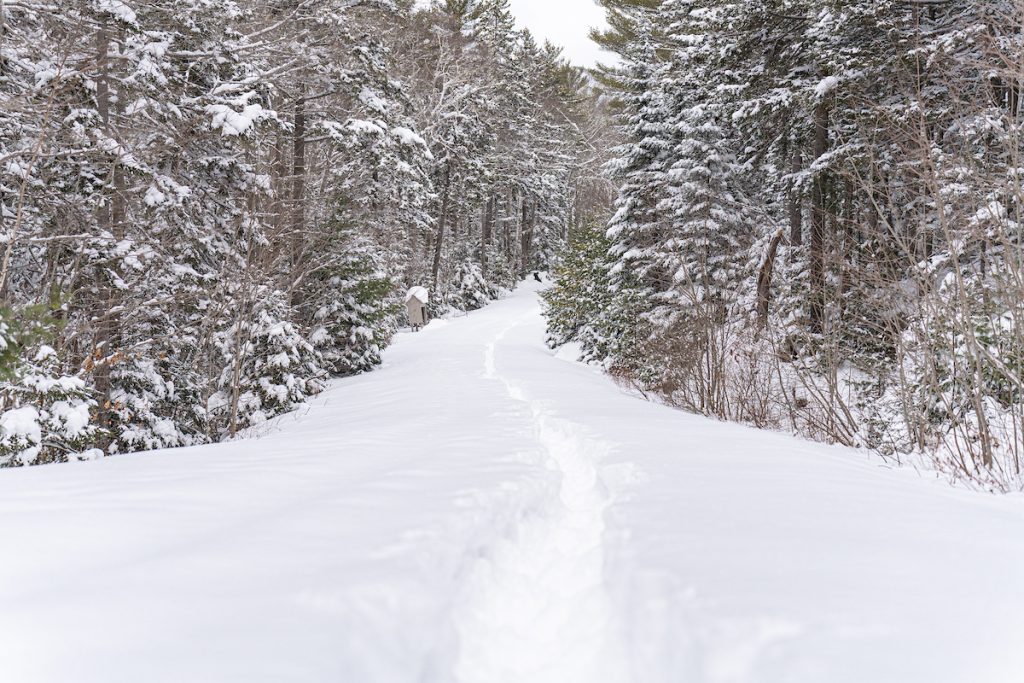
The cornerstone of any well-designed garden starts with the “bones.” Much like the skeleton acts as the infrastructure for muscles and soft tissues in the animal world, the skeleton of the garden is the support structure that works to anchor woody and perennial specimens in the landscape offering winter interest and more.
Snuggled in and sleeping beneath their winter blanket, dormant plants benefit from the additional protection that trees provide. Humans, insects, and animals also benefit from the values trees offer. The “bones” of a garden could be represented not just by trees but by sculptures, stones, garden art, trellises, or tutors, to name a few, but of course, my favorite way to incorporate these design elements into a garden is with trees.
Trees have a multitude of benefits. By selecting the right trees for your site, you have an opportunity to add high ecological value to the landscape. In doing so, you will be providing shade, shelter, food, and medicine for humans, animals, and insects engaging in your space.
Native trees are a great consideration for the landscape. They are attractive, adaptable, and provide a highly positive ecological impact on the garden. And if you only have a small amount of land to work with, you can often find a native cultivar to fit your needs. When in doubt, talk to your favorite nursery staff—or better yet, reach out to one of our experienced horticulturists here at the Gardens!
While it is impossible to choose favorites, I have taken the guesswork out of it for you by providing site-specific tree selections that work for a variety of applications. These are my top-rated selections, worthy of including in the winter landscape. I hope you are inspired to try something from this list. Enjoy!
Spectacular winter interest: White birch (Betula papyrifera)
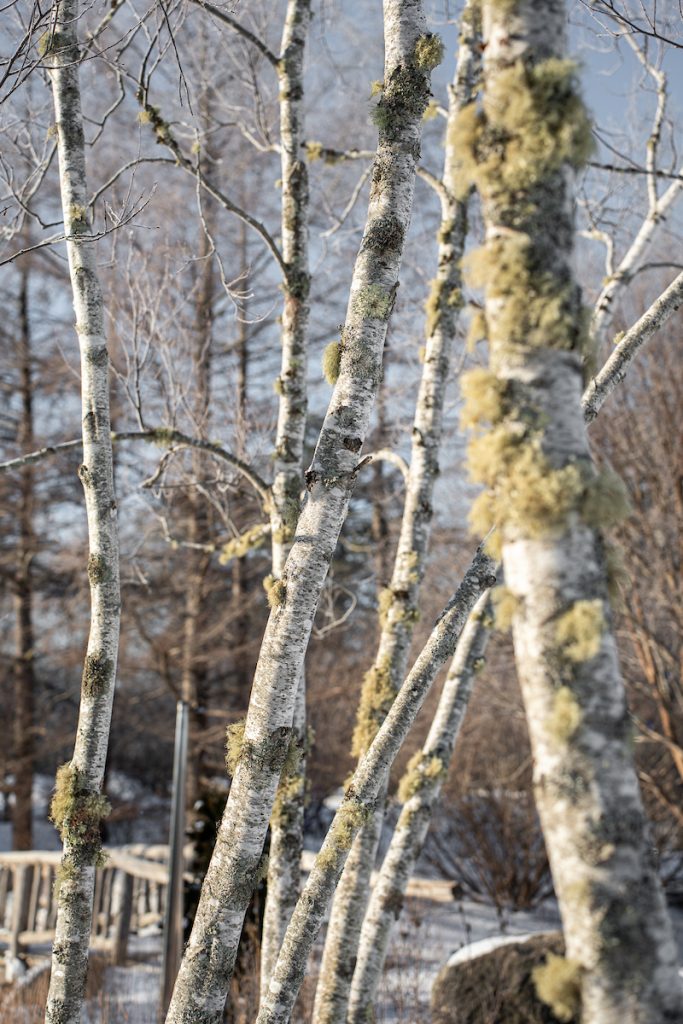
With its characteristic white, peeling bark, white birch, also known as canoe birch or paper birch, is a widely recognized native of the Northwoods. Typically a multi-trunked tree, white birch can grow to heights of 50’ or more over time. Birch has been used for centuries for food, medicine, and utilitarian products like baskets and canoes.
While preferring moist soil, white birch is adaptable to different light conditions, thriving in full sun to light shade. Birds and mammals use birch for food and shelter while the dappled shade provided by its toothed leaves swaying in the breeze, cooling the air, offers a respite from summer heat. A perfect spot for that garden bench! You have been working hard, now sit and relax.
Now reflect on the fact that white birch is also a larval host for the Eastern Tiger Swallowtail and the Luna moth, and you have succeeded in increasing the ecological impact of your garden.
To accentuate the white peeling bark, especially in winter, consider planting dark evergreen trees as a backdrop and be rewarded with spectacular year-round interest.
Sunny, dry soil: Jack pine (Pinus banksiana) & (Pinus banksiana ‘Schoodic’)
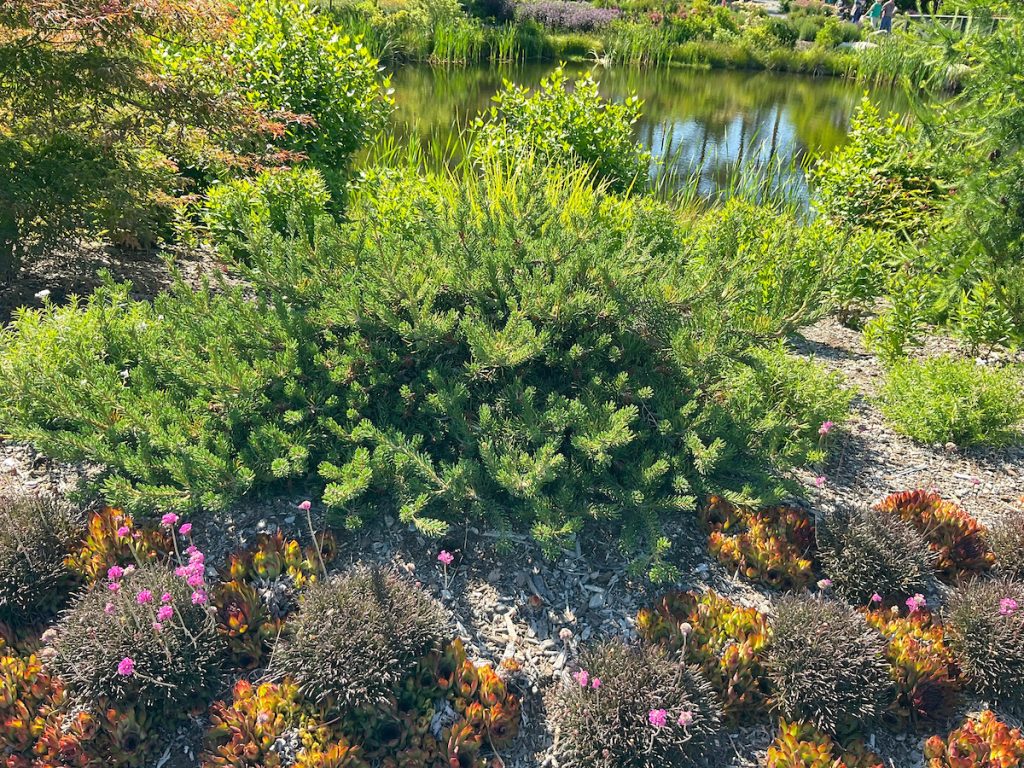
This funky pine thrives in full sun, preferring lean, dry, sandy, or rocky soils—perfect for a water-wise garden. While considered by some to be scrubby or shabby in habit, I personally love the gnarly, twisted growth of this species, especially along the coast where its wind-swept branches contort over time.
While this native tree can grow upwards of 50’, the highly compact P. banskiana ‘Schoodic’—a prostrate-growing form found on the Schoodic Peninsula in Maine—is perfect for a smaller garden where it can be used as a groundcover. A fun alternative to juniper, P. ‘Schoodic’ is a slow growing cultivar reaching approximately 2’ high by 4’ wide.
Since pines are evergreen, they hold their needles throughout the winter, giving your garden extra flare during the cold season.
Sunny, moist soil: Atlantic white cedar (Chamaecyparis thyoides)
The Atlantic white cedar is one of my favorite conifers that sadly gets overlooked by its faster growing arborvitae cousins. This tree thrives in full sun but can take part-shade as well. Rot-resistant wood makes this tree an excellent choice in the building industry where it has been traditionally used to make shingles, posts, and telephone poles.
While considered rare in Maine due to habitat loss from logging, this tree thrives in moist soil and wetlands and is a useful consideration for your rain garden. It has a gorgeous peeling gray-toned bark with gray-blue fruits developing in autumn. Atlantic white cedar provides food and shelter for birds and mammals, slowly growing upwards of 45-50’. The fruits of this lovely evergreen persist into winter.
Shade: Pagoda Dogwood (Cornus alternifolia)
Pictured here: Varigated Pagoda Dogwood (Cornus Alternifolia Argentea)
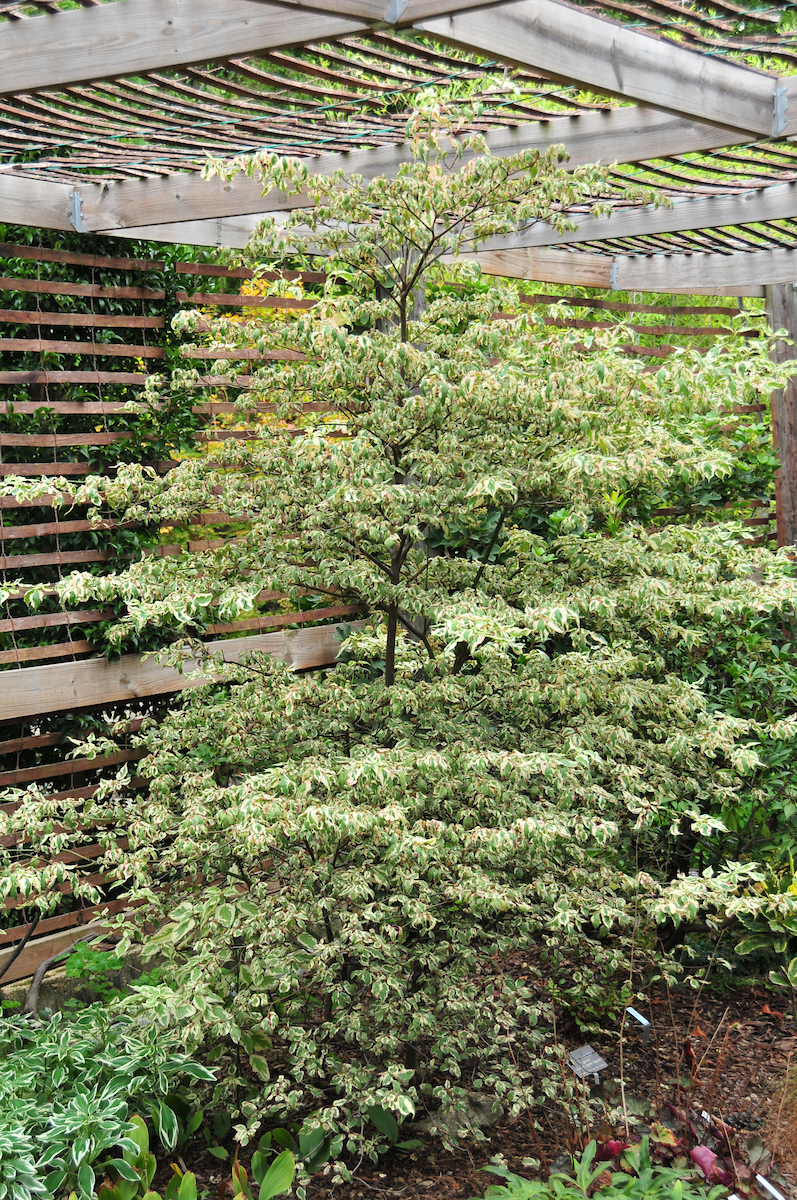
The Pagoda dogwood is a small tree growing upwards 25-30’ tall with alternate horizontal branching. White, fragrant, flat-topped flowers turn into delicious dark purple fruit in the fall, clustered atop red stems—beloved by small winter grazers, less so by humans who may find their bitterness a burden too heavy to bear. This dogwood species, a bird haven, also attracts butterflies and is larval host to the Spring Azure butterfly.
Prized for its rich fall color, dark fruit, colorful branches, and architectural shape in winter, this species prefers shade and moist soil and is even tolerant of clay soils. The Pagoda dogwood is a perfect specimen for a natural or woodland garden or for use along a wooded edge.
Small space? Don’t worry, try: Smooth Serviceberry, a.k.a. shadbush, saskatoon (Amelanchier laevis)
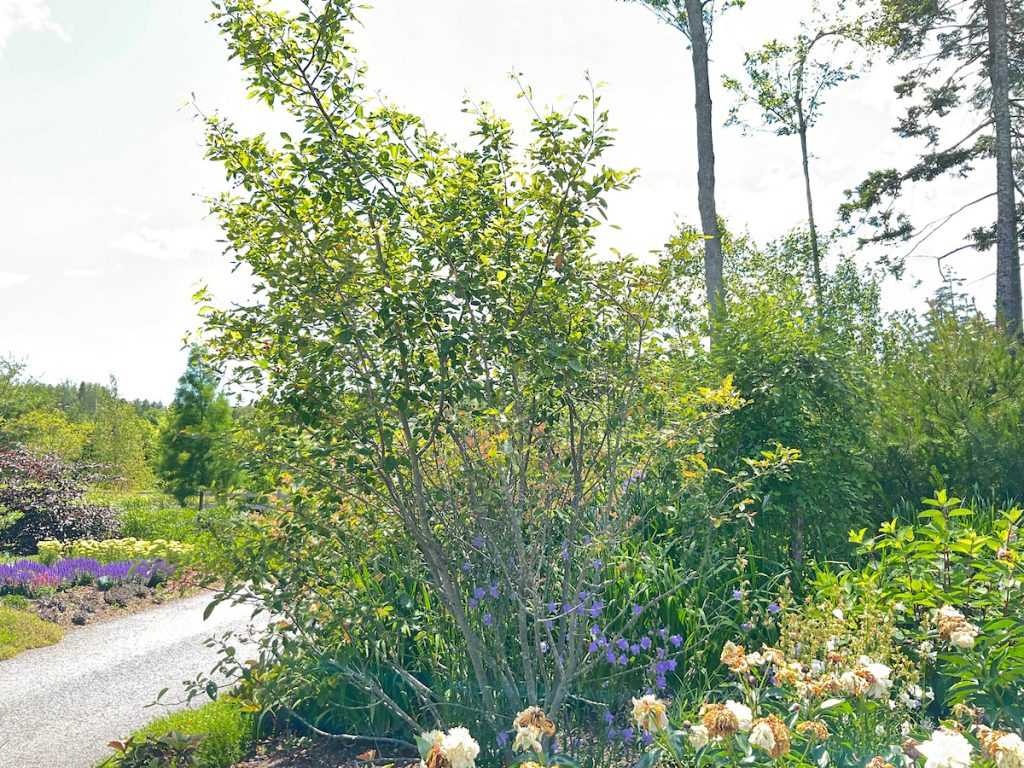
This common species of serviceberry is found throughout the state of Maine. Growing to heights of around 20’ tall, this species will not overwhelm a smaller garden. Winter bark is a gray-violet color, fissured and twisted.
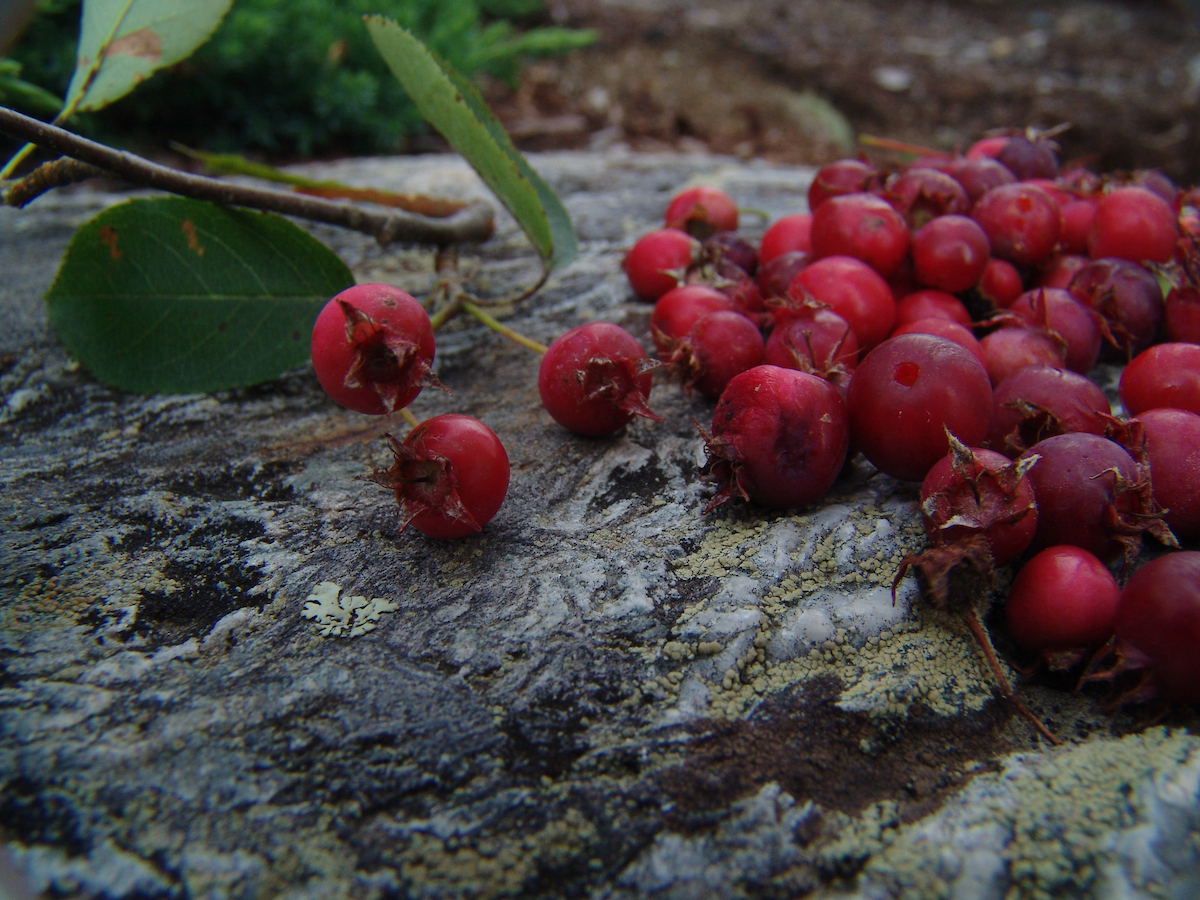
While smaller in stature, its ecological impact is great, providing food for birds, small mammals, and humans alike. The fruits make delicious jams and pies. The early bloom time of Amelanchier laevis rewards the gardener with sweetly scented white flower clusters at a time when other trees are just starting to awaken from their winter slumber. This early bloom makes it easily identifiable and provides pollen for insects at a time when not much else is available.
Though shadbush prefers regular moisture, it can sustain mild drought conditions once established. Plant it in full sun along a woodland edge or in a naturalistic garden.
Large specimen: Basswood or Linden (Tilia americana)
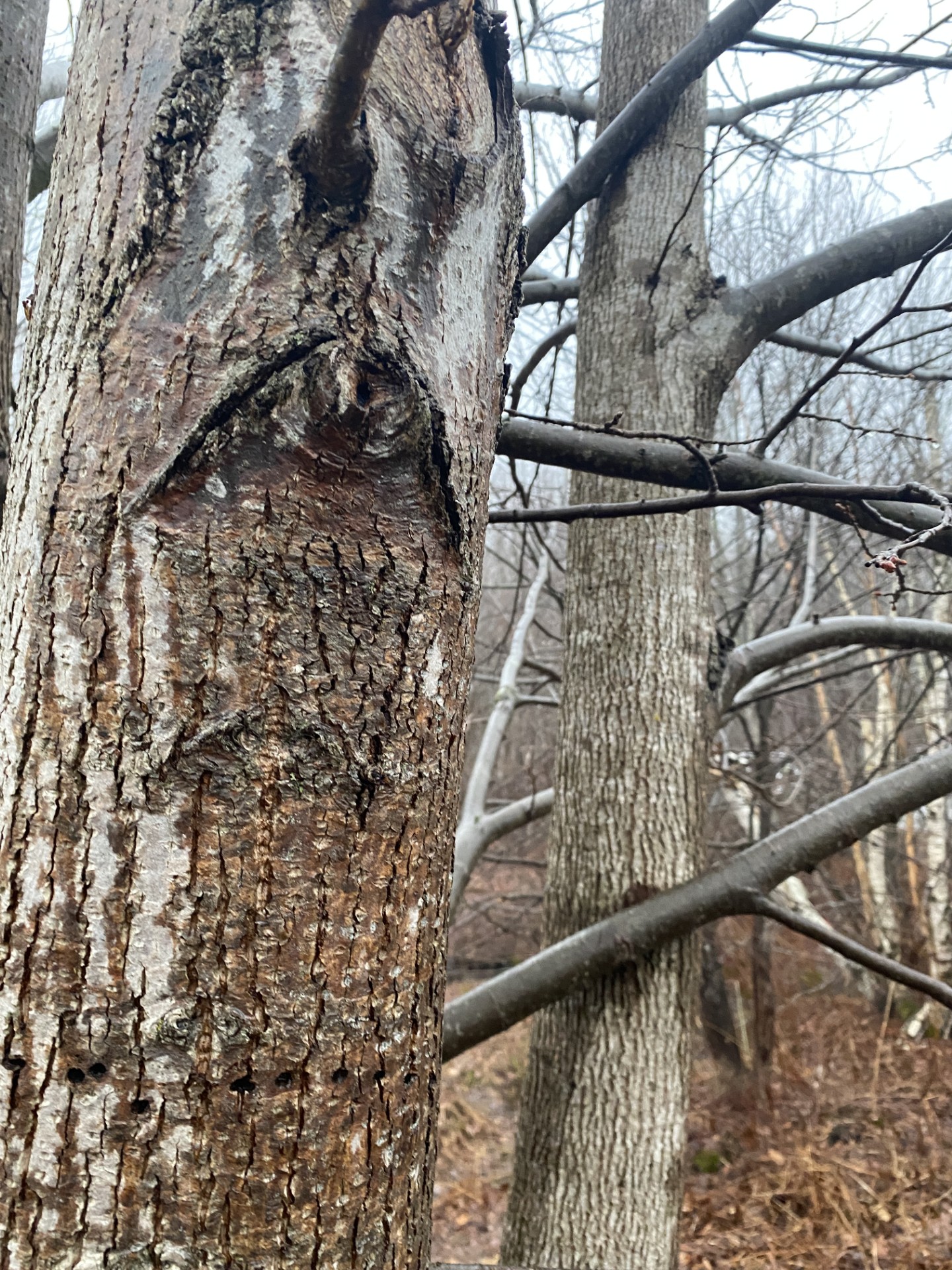
Especially evident in winter, American Basswood is identified by its deeply angular, fissured gray bark. The generous size of this tree makes it well suited as a shade tree in a larger landscape. Basswood can grow up to 50-80’ tall and provides food and shelter for birds, insects, and small mammals.
Humans prefer basswood wood for making a myriad of assorted products ranging from furniture to tools, and the flowers make delicious and nutritious tea.
While not a specimen that you might think of when you think of trees for winter interest, it is worth highlighting the special attributes of this tree that make it worthy of consideration. From its zig-zagging red tipped branches to its hearty swollen buds and nut-like drupes attached to an elongated bract that can persist through winter, there is a kaleidoscope of features of this tree to admire all year long.
Staff pick, my personal favorite: Eastern Larch, Tamarack or Hackmatack (Larix laricina)
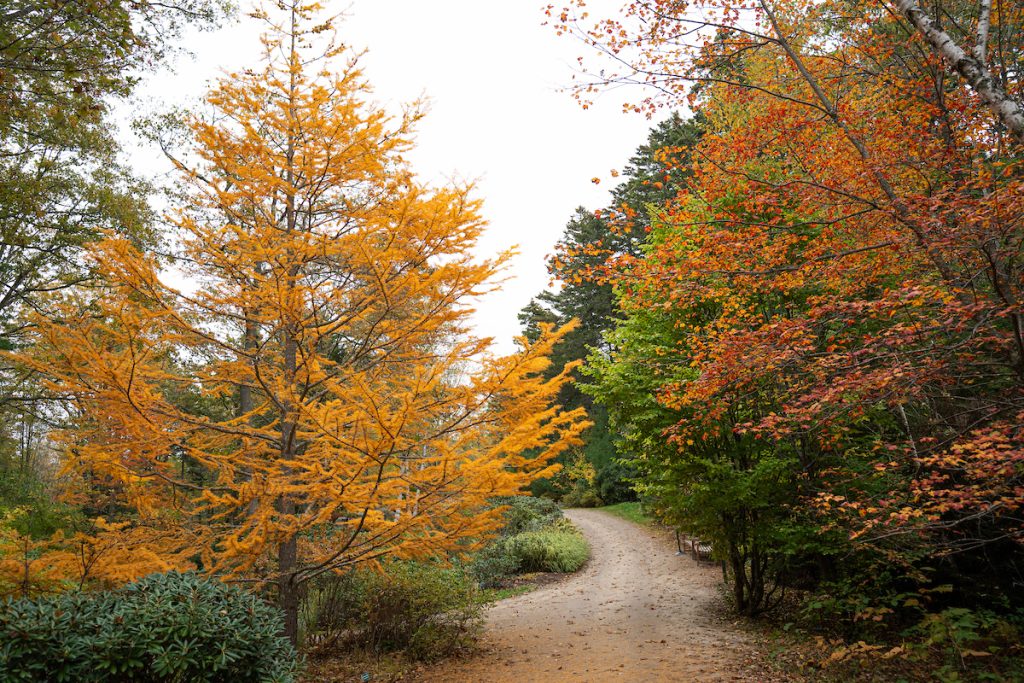
If I absolutely had to pick one tree to look at for the rest of my life, it would certainly be Eastern Larch. As if being one of North America’s only deciduous conifers was not cool enough, the tamarack, or hackmatack, boasts one of the most architecturally pleasing—in my opinion—structures of all the trees in the northern boreal forest complex.
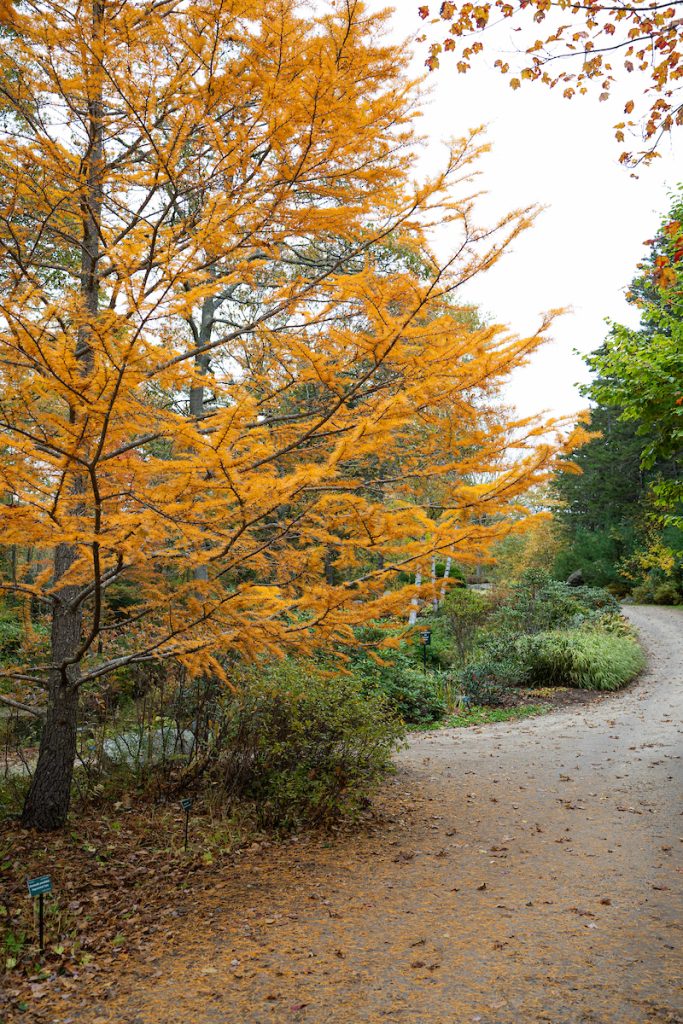
The precursor to needle drop is the most beautiful golden fall color. The once perfectly dappled shade provided by the soft needles of this tree gives way to knobby branches, where male and female cones once gave way to delicate needle bundles. With a preference for acidic, moist but well-drained soil, try growing larch in full sun to light shade.
The Eastern Larch has a narrow, pyramidal habit growing to heights of 50-60’ and is host to hundreds of species of caterpillars.
It is truly a tree worth having in the winter landscape and all year long.